
This collection of Supply Chain KPIs is compiled by former McKinsey, BCG, Deloitte, EY, and Capgemini consultants based on best practices in Supply Chain Management.
This presentation provides a comprehensive set of 600+ Supply Chain Management KPIs to allow for precise monitoring and optimization of Supply Chain operations, enhancing efficiency and resiliency, while reducing costs.
It offers a ready-to-use, extensive collection of KPIs, saving significant time and effort in research and compilation.
The wide range of KPIs allows for tailored selection and customization to fit specific industry needs and organizational goals, enhancing the relevance and impact of SCM initiatives.
KEY PERFORMANCE INDICATORS PPT DESCRIPTION
Editor Summary
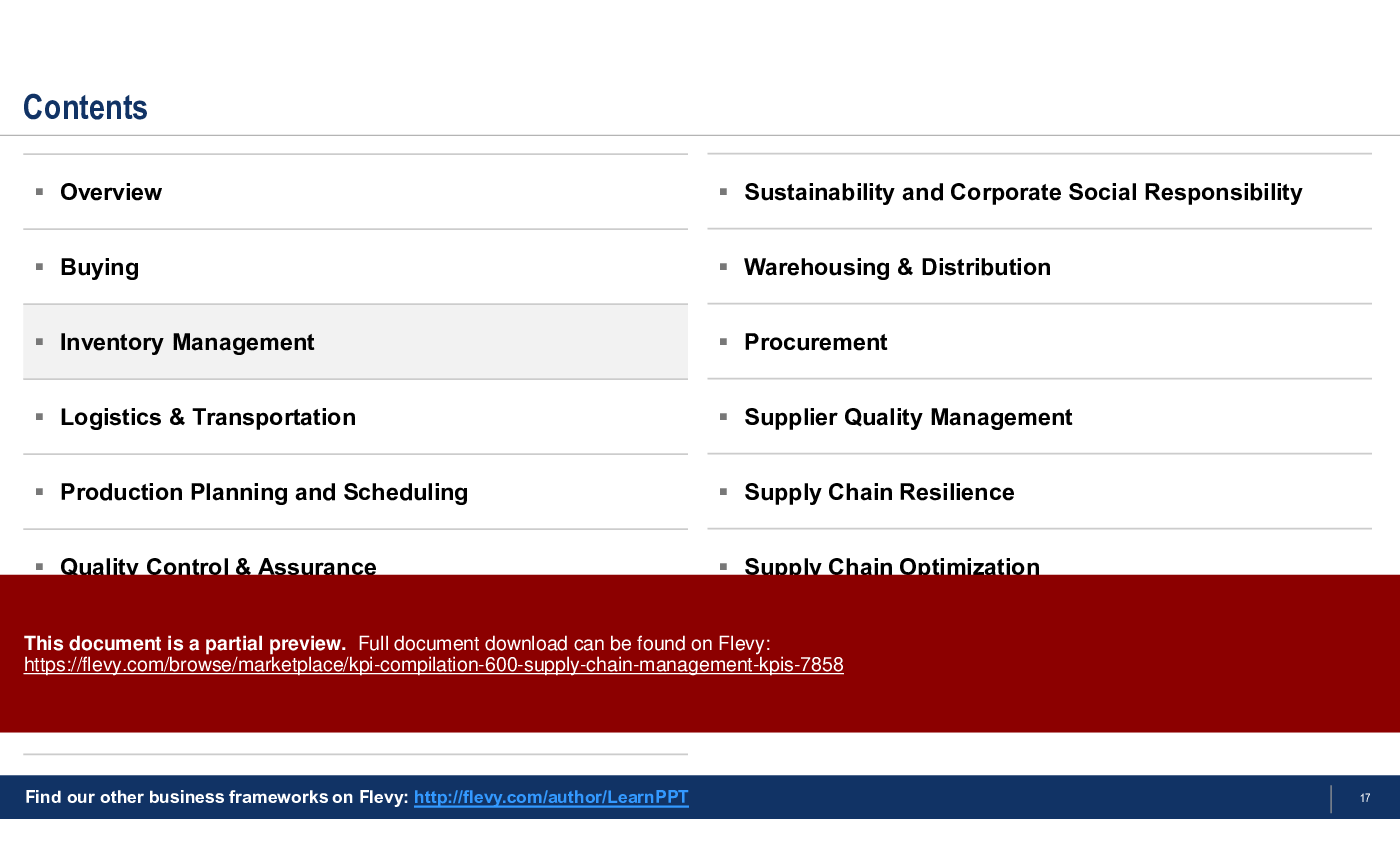
KPI Compilation: 600+ Supply Chain Management KPIs is a 141-slide PowerPoint presenting over 600 supply chain KPIs organized into 14 functional groups (Buying; Inventory Management; Logistics & Transportation; Production Planning and Scheduling; Quality Control & Assurance; Strategic Sourcing; Supplier Relationship Management; Sustainability & CSR; Warehousing & Distribution; Procurement; Supplier Quality Management; Supply Chain Resilience; Supply Chain Optimization; Supply Chain Digitization).
Read moreIncludes KPI selection guidelines, measurement methods, and detailed formulas for each KPI. Target users include supply chain managers, procurement heads, operations directors, and management consultants. Sold as a digital download on Flevy with immediate digital delivery.
Use this compilation when you need to define, standardize, or benchmark KPIs across supply chain functions — for example during transformation programs, digitalization projects, resilience planning, or procurement optimization.
Supply Chain Director designing a cross-functional KPI taxonomy to align strategic and operational metrics using the presentation’s KPI selection guidelines and formulas.
Procurement Head quantifying supplier performance and cost-management metrics by implementing the Buying and Procurement KPIs with provided measurement methods.
Operations Manager establishing inventory controls and turnover reporting using Inventory Management KPIs and explicit calculation formulas.
Management Consultant building client-facing KPI dashboards and benchmarks across the 14 defined groups.
The structured, function-by-function taxonomy and explicit calculation formulas reflect the operational performance measurement approach used by McKinsey, BCG, and Deloitte.
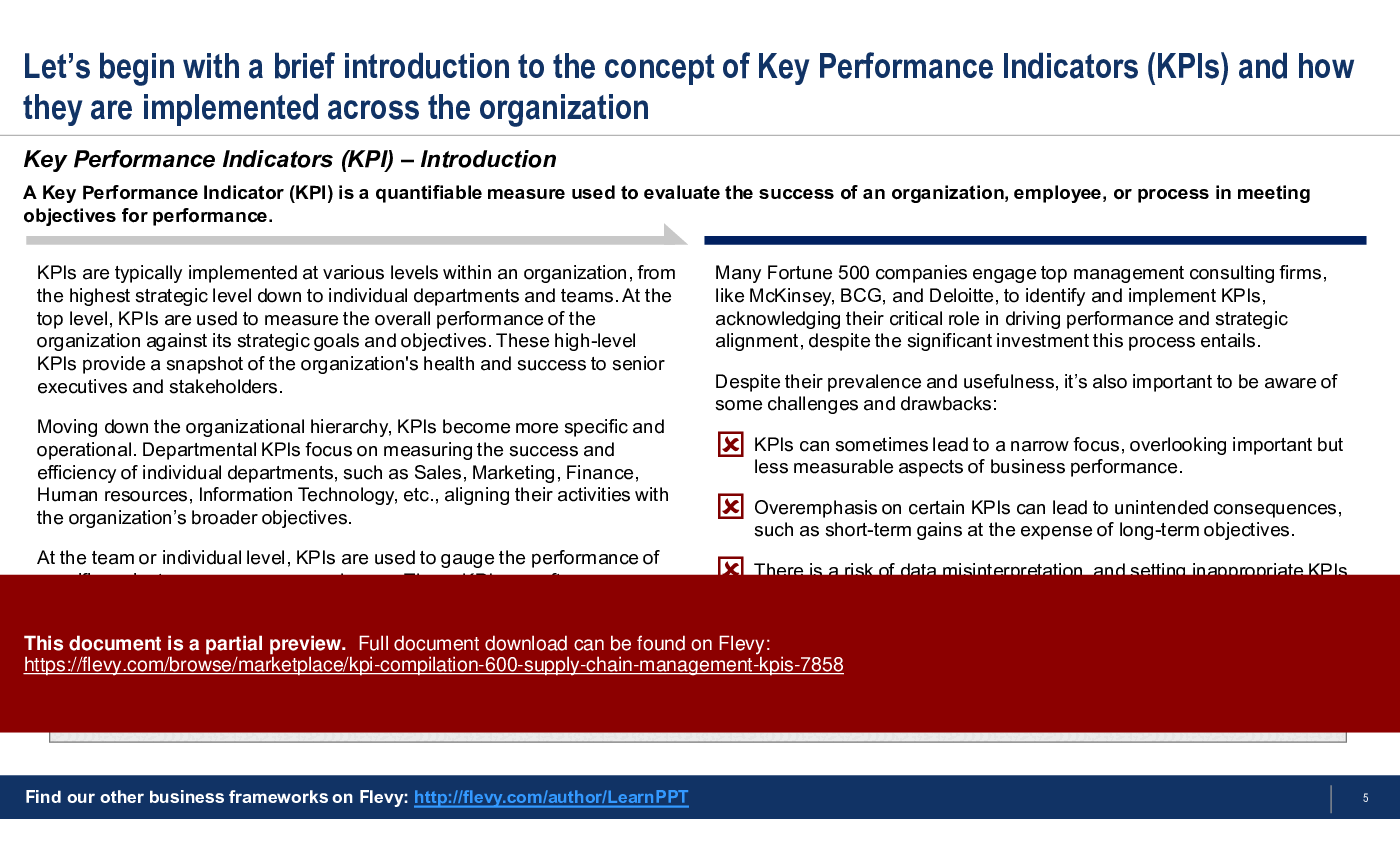
This presentation is a comprehensive collection of Key Performance Indicators (KPI) related to Supply Chain Management (SCM). A KPI is a quantifiable measure used to evaluate the success of an organization, employee, or process in meeting objectives for performance.
KPIs are typically implemented at various levels within an organization, from the highest strategic level down to individual departments and teams. KPIs in Supply Chain Management allow for precise monitoring and optimization of Supply Chain operations, enhancing efficiency and resiliency, while reducing costs.
In total, we have compiled over 600+ SCM KPIs in this PowerPoint presentation. These KPIs are categorized into the following 14 groups, which is also how this presentation has been structured:
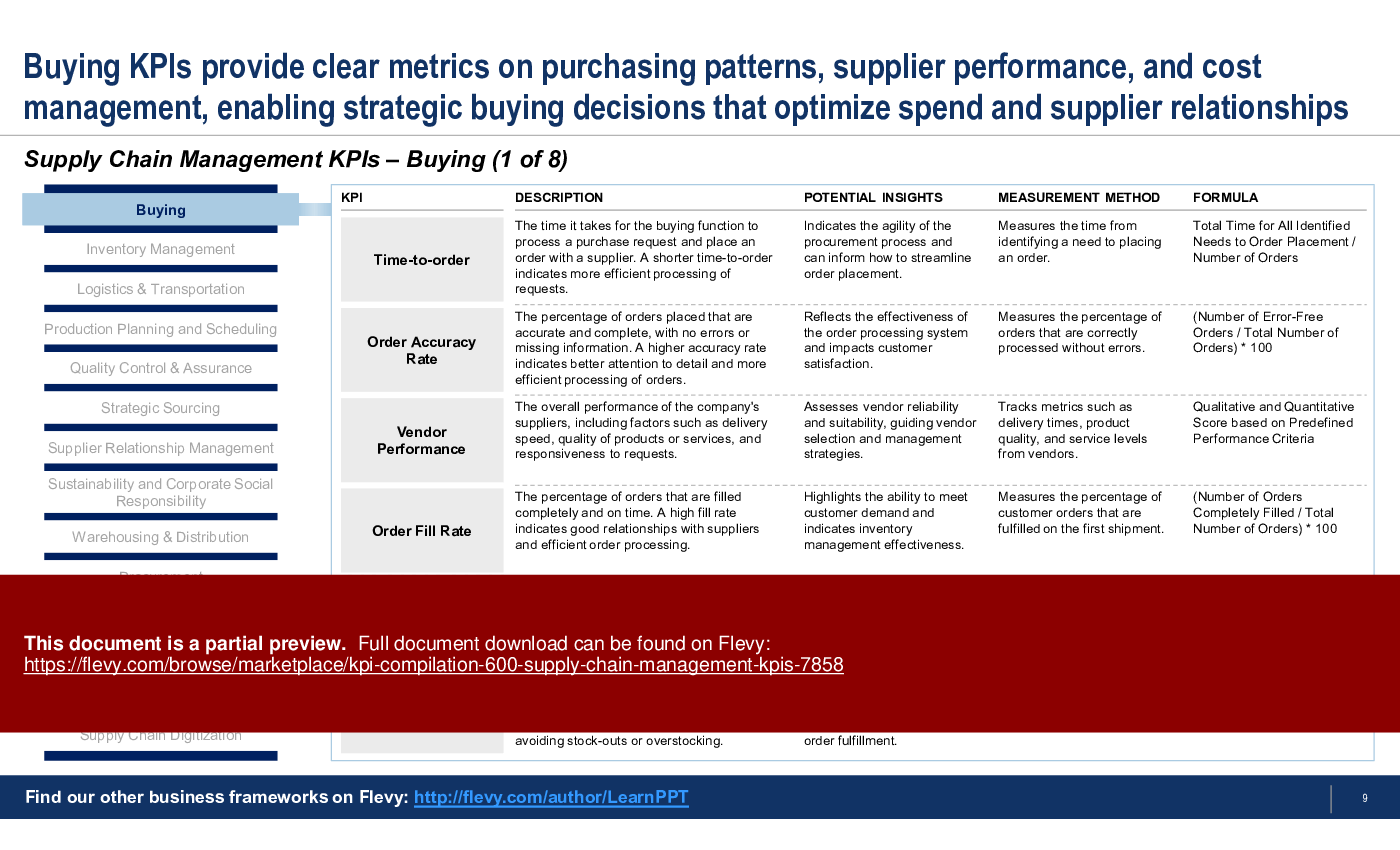
1. Buying – KPIs provide clear metrics on purchasing patterns, supplier performance, and cost management, enabling strategic buying decisions that optimize spend and supplier relationships.
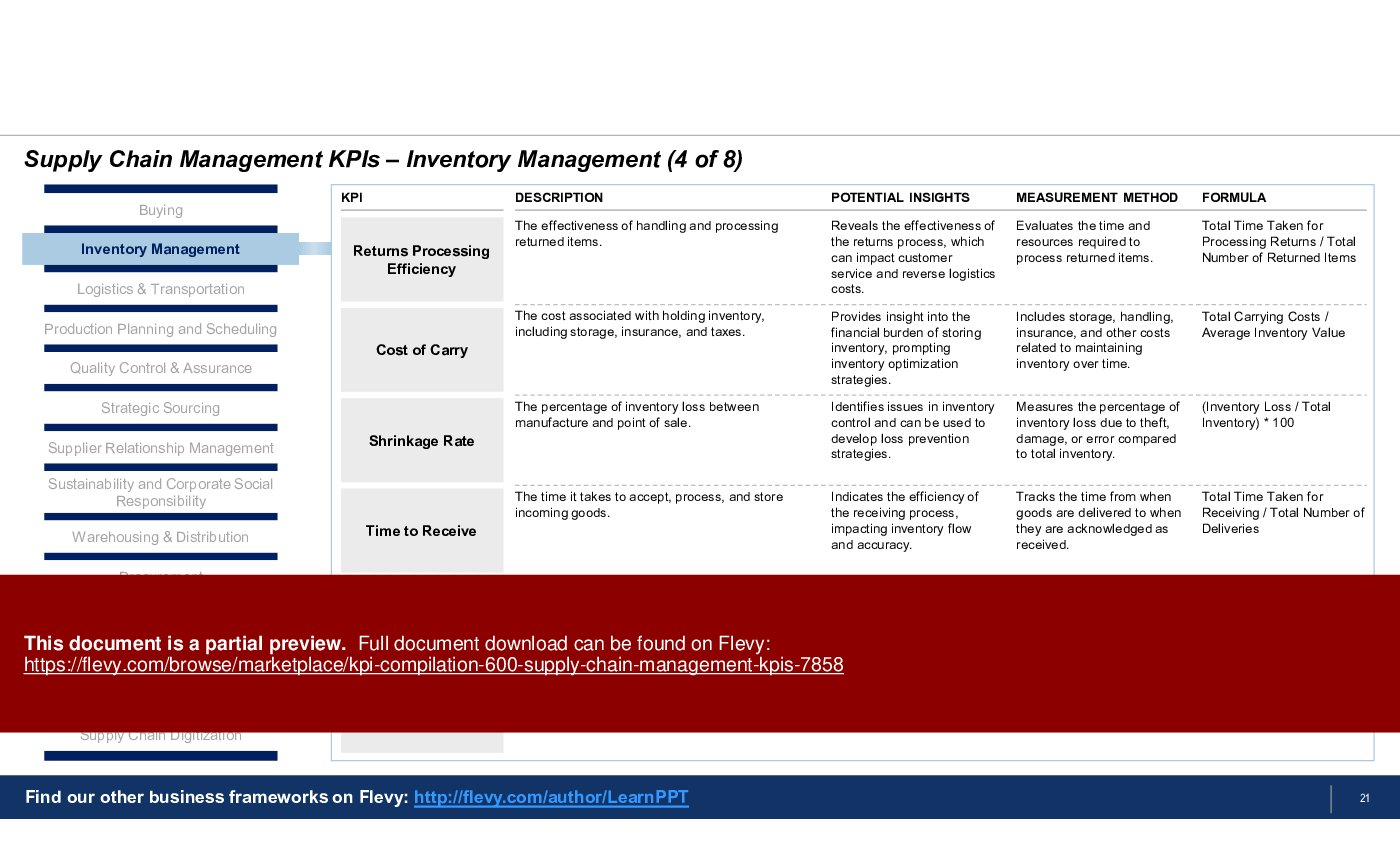
2. Inventory Management – These KPIs track turnover rates, carrying costs, and stock levels, ensuring inventory is managed efficiently to meet demand without excess expenditure.
3. Logistics & Transportation – Logistics KPIs offer insights into delivery times, transportation costs, and service levels, helping to streamline distribution and enhance customer satisfaction.
4. Production Planning and Scheduling – KPIs in this area help to balance demand forecasting with production capacity, ensuring optimal resource utilization and timely order fulfillment.
5. Quality Control & Assurance – Quality-related KPIs monitor product standards and defect rates, driving continuous improvement and maintaining brand integrity.
6. Strategic Sourcing – These KPIs assess the value generated from procurement strategies, guiding C-level decisions on sourcing materials and services to improve cost-effectiveness and quality.
7. Supplier Relationship Management – KPIs track supplier performance, compliance, and risk, ensuring strong, mutually beneficial supplier partnerships that support business objectives.
8. Sustainability and Corporate Social Responsibility – KPIs measure the environmental and social impact of the supply chain, aligning operational practices with CSR goals and consumer expectations.
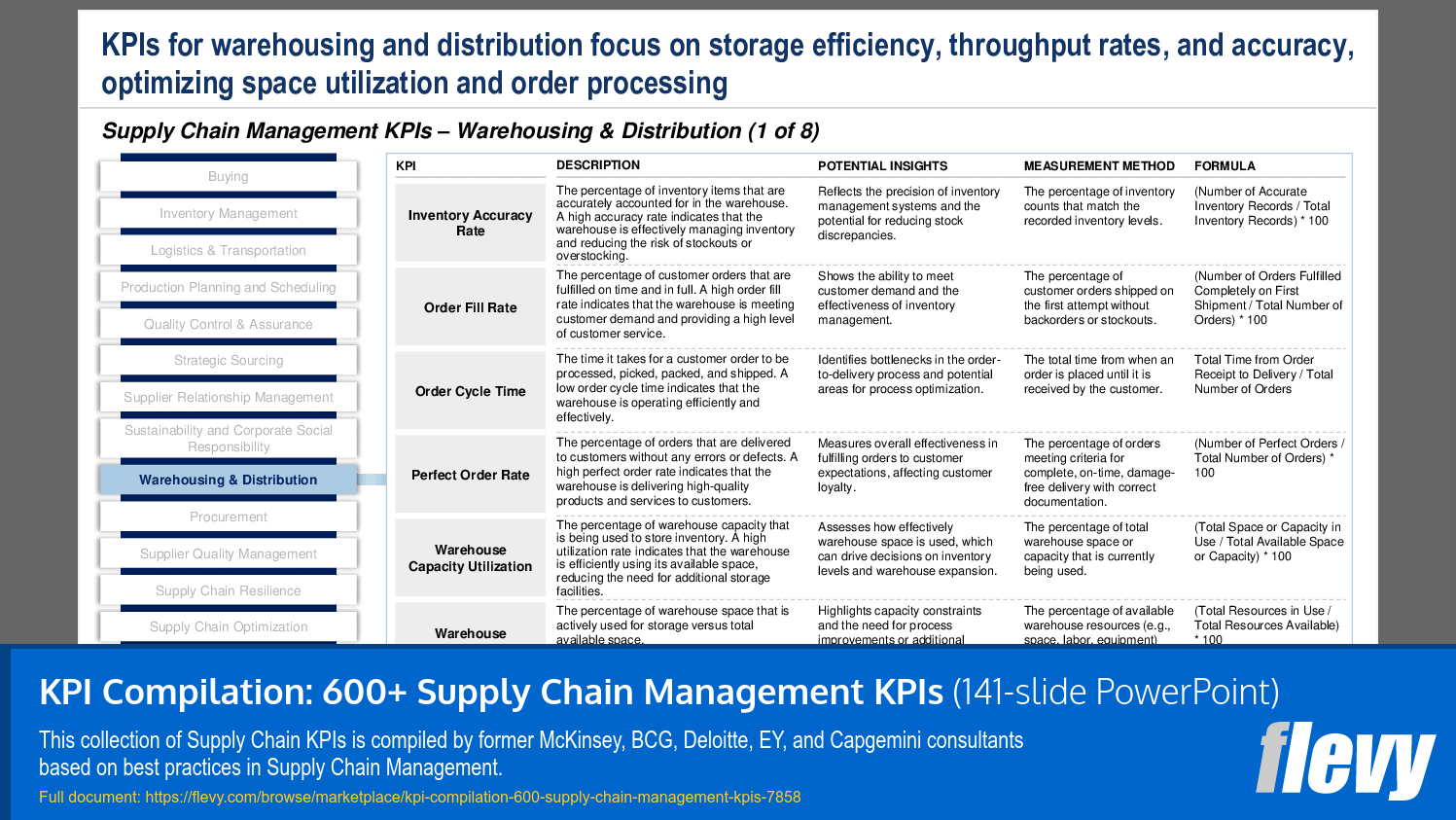
9. Warehousing & Distribution – KPIs for warehousing and distribution focus on storage efficiency, throughput rates, and accuracy, optimizing space utilization and order processing.
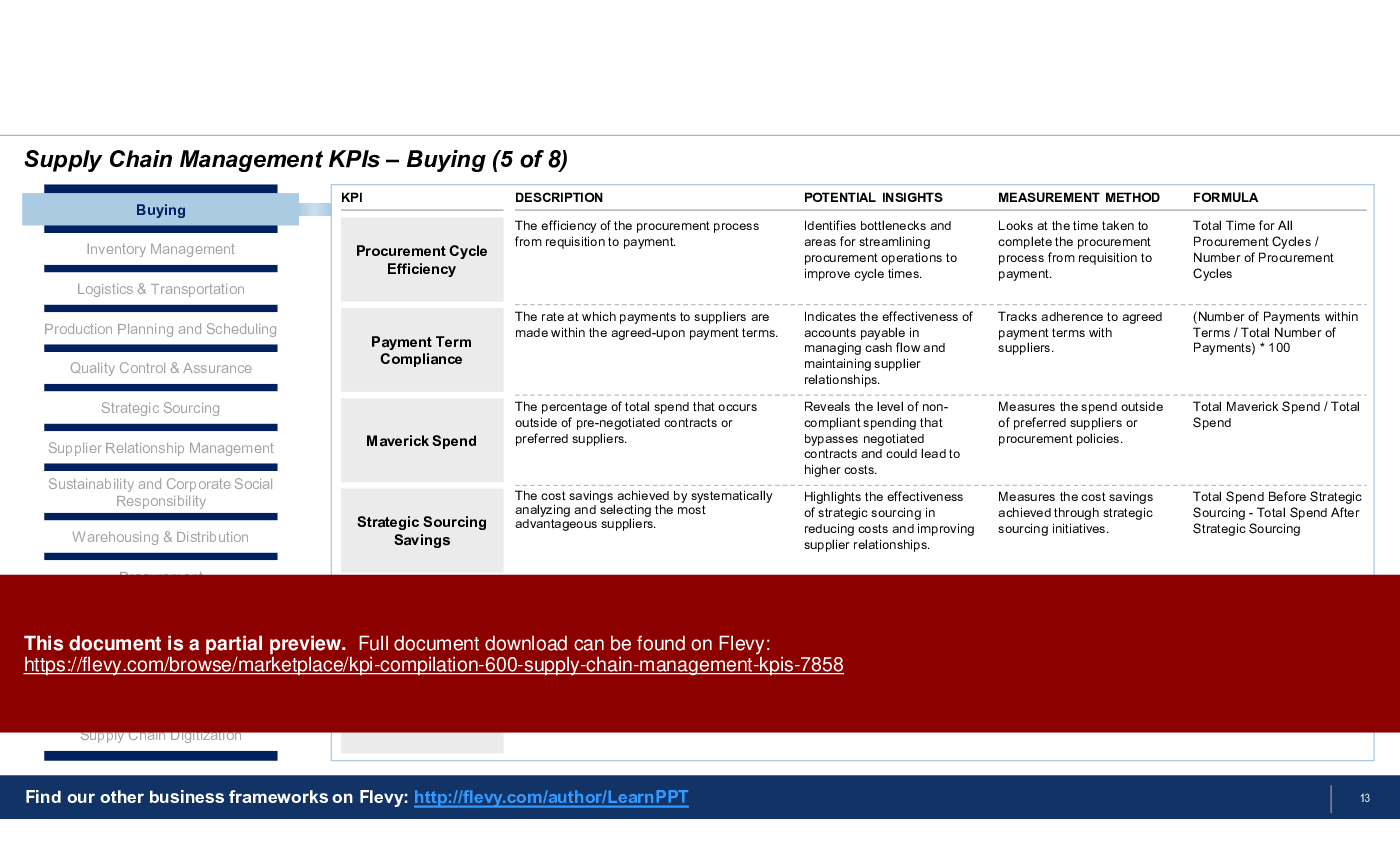
10. Procurement – Procurement KPIs provide critical data on spending efficiency, vendor negotiations, and contract management, driving cost savings and value creation.
11. Supplier Quality Management – These KPIs evaluate the quality of materials received from suppliers, ensuring inputs meet standards and contribute to high-quality final products.
12. Supply Chain Resilience – Resilience-focused KPIs measure the supply chain's ability to withstand disruptions and recover quickly, maintaining operational continuity in adverse conditions.
13. Supply Chain Optimization – Optimization KPIs analyze the entire supply chain's performance, identifying bottlenecks and opportunities for streamlined processes and cost reduction.
14. Supply Chain Digitization – KPIs in digitization evaluate the progress and effectiveness of technology implementations across the supply chain, enhancing transparency, speed, and adaptability.
Many Fortune 500 companies engage top management consulting firms, like McKinsey, BCG, and Deloitte, to identify and implement KPIs, acknowledging their critical role in driving performance and strategic alignment, despite the significant investment this process entails.
This presentation also includes an introduction on KPIs, covering topics like KPI selection guidelines and common usages.
The PPT outlines the potential insights and measurement methods for each KPI, providing clear guidance on their practical application. It also includes detailed formulas for calculating each KPI, ensuring accurate and consistent performance tracking.
Got a question about the product? Email us at support@flevy.com or ask the author directly by using the "Ask the Author a Question" form. If you cannot view the preview above this document description, go here to view the large preview instead.
TOPIC FAQ
What inventory KPIs should I track to balance stock levels and working capital?
Key inventory KPIs include inventory turnover rates, carrying cost of inventory, days of inventory on hand, stock availability, and obsolete stock percentage. These measures help balance meeting demand with minimizing holding costs and are covered under the Inventory Management group that lists turnover rates, carrying costs, and stock-level metrics.
How do I choose which supply chain KPIs to implement at strategic versus team levels?
Choose KPIs by linking them to organizational objectives, ensuring roll-up from team-level operational metrics to strategic outcomes, and applying selection criteria like measurability and ownership. The presentation includes KPI selection guidelines and guidance for implementing KPIs across strategic-to-team levels, supported by the 14 functional KPI groups.
What kinds of calculation support do I need for reliable supply chain KPIs?
Reliable KPIs require clearly defined numerators/denominators, data sources, aggregation rules, and measurement frequency. The referenced PowerPoint provides measurement methods and detailed formulas for each KPI to ensure consistent calculation and tracking across teams and systems with explicit formula definitions.
Which KPI categories are most relevant for benchmarking supplier performance after a sourcing change?
Benchmark supplier performance using Supplier Relationship Management, Supplier Quality Management, Buying, and Procurement KPIs. Relevant measures include on-time delivery, defect rates, compliance, lead time variability, and cost per unit — all addressed within the supplier-related KPI groups in the compilation.
What KPIs effectively measure supply chain resilience for disruption planning?
Resilience KPIs focus on time-to-recover, recovery rate, contingency coverage, supplier risk exposure, and inventory buffer effectiveness. These metrics assess the supply chain’s ability to withstand and recover from disruptions and are grouped under Supply Chain Resilience in the compilation.
What should I look for in a supply chain KPI template to reduce consulting time?
Look for breadth across functions, explicit calculation formulas, measurement methods, and KPI selection guidance so teams can implement quickly. Flevy’s KPI Compilation: 600+ Supply Chain Management KPIs provides a 141-slide deck with 14 functional groups and detailed formulas to support faster roll-out.
How do pre-built KPI collections compare to hiring consultants for KPI definition?
Pre-built collections provide ready-defined metrics, formulas, and categorization that can reduce time and external consulting fees, while consultants still add facilitation and customization. The market practice notes many Fortune 500s hire top firms despite cost; a template like this offers 600+ KPIs and 141 slides as an alternative resource.
How do digitization KPIs differ from logistics and transportation KPIs?
Digitization KPIs measure technology adoption, data quality, process automation, and system uptime, evaluating the effectiveness of digital implementations. Logistics & Transportation KPIs focus on delivery times, transportation cost per unit, and service levels. The compilation separates these concerns into Supply Chain Digitization and Logistics & Transportation groups.
This PPT slide provides an overview of key performance indicators (KPIs) in supply chain management, focusing on metrics essential for evaluating purchasing patterns, supplier performance, and cost management. Key KPIs include "Time-to-order," which measures procurement efficiency; "Order Accuracy Rate," assessing order precision for enhanced customer satisfaction; "Vendor Performance," evaluating supplier reliability and service quality; "Order Fill Rate," measuring order completeness; "Cost per Order," highlighting efficiency and cost reduction opportunities; and "Inventory Accuracy," critical for effective inventory management. These KPIs enable data-driven decisions that optimize spending and strengthen supplier relationships, supporting strategic initiatives within the supply chain.
This PPT slide provides an overview of key performance indicators (KPIs) for quality control in supply chain management. First Pass Yield (FPY) measures the percentage of products passing quality control on the first attempt, reflecting production efficiency. The Defect Rate indicates the percentage of defective units produced, serving as a barometer for production quality. Customer Complaints track dissatisfaction with product quality, helping identify areas for improvement. On-time Delivery measures the percentage of orders delivered as scheduled, reflecting supplier reliability. The Cost of Quality includes all costs related to ensuring quality, highlighting opportunities for cost reduction. Production Downtime due to quality issues indicates lost production time, vital for assessing manufacturing efficiency. These KPIs create a framework for enhancing quality control processes and maintaining operational efficiency.
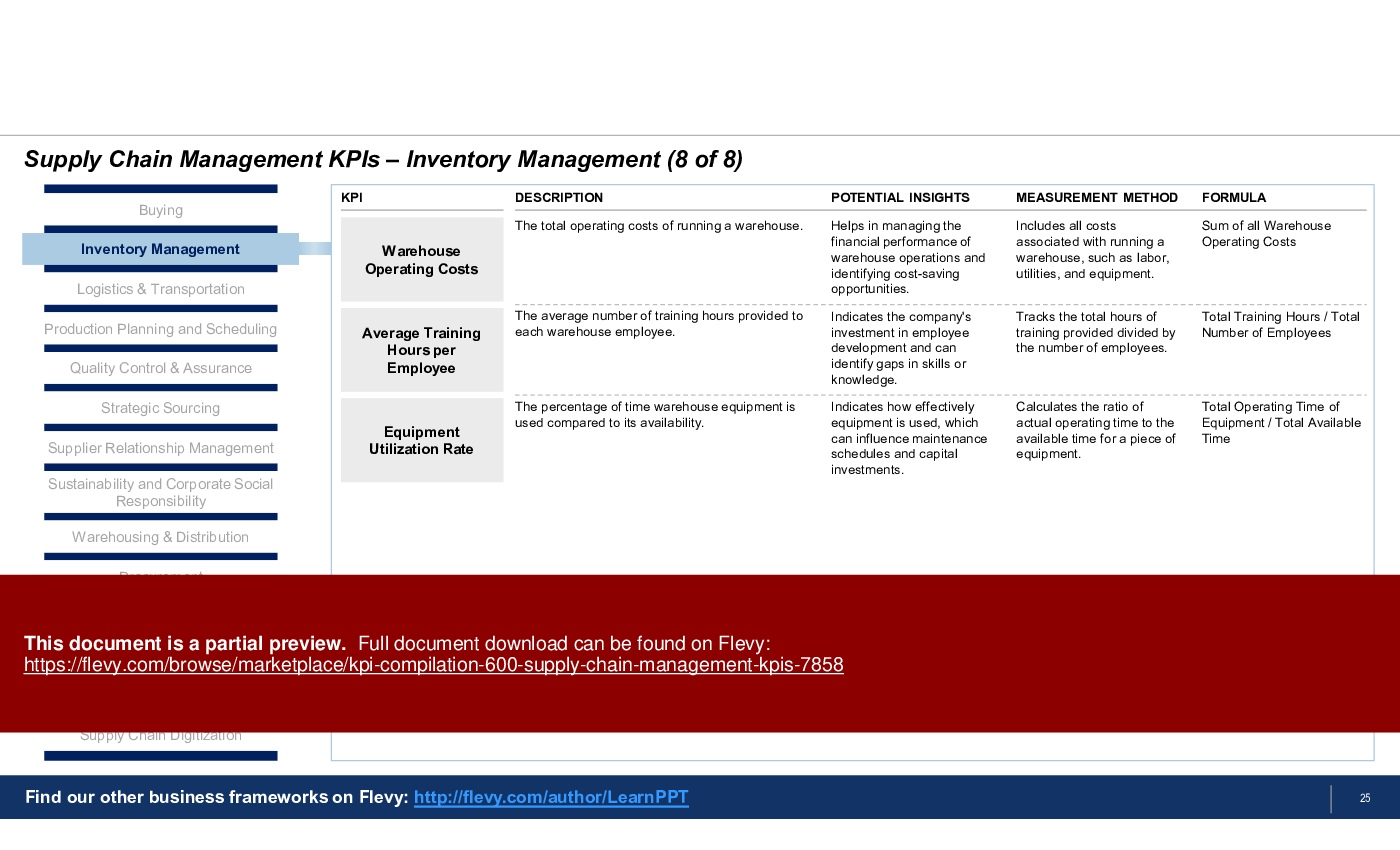
This PPT slide presents key performance indicators (KPIs) for inventory management within supply chain management. The Inventory Turnover Rate measures how frequently inventory is sold and replaced, highlighting efficiency issues like overstocking or stockouts. The Stockout Rate indicates the frequency of unavailable items, impacting customer satisfaction and demand fulfillment. Carrying Cost of Inventory encompasses total costs of holding inventory, revealing opportunities for cost reduction. Order Lead Time assesses the efficiency of the order-to-delivery process, while Order Accuracy Rate measures fulfillment accuracy, affecting customer satisfaction. Finally, Inventory Accuracy reflects the reliability of inventory records, essential for effective management. These KPIs enable organizations to meet customer demand while controlling costs.
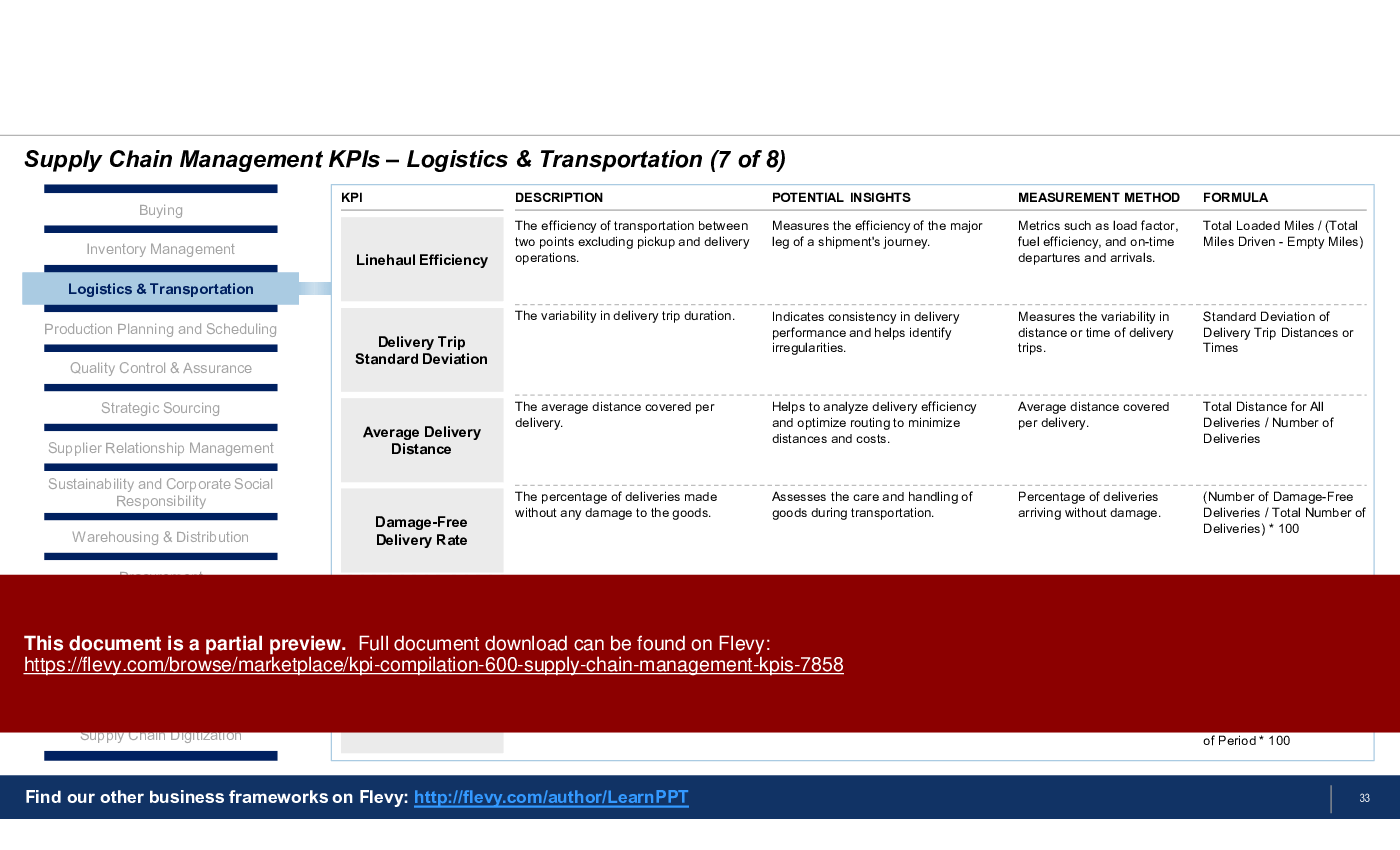
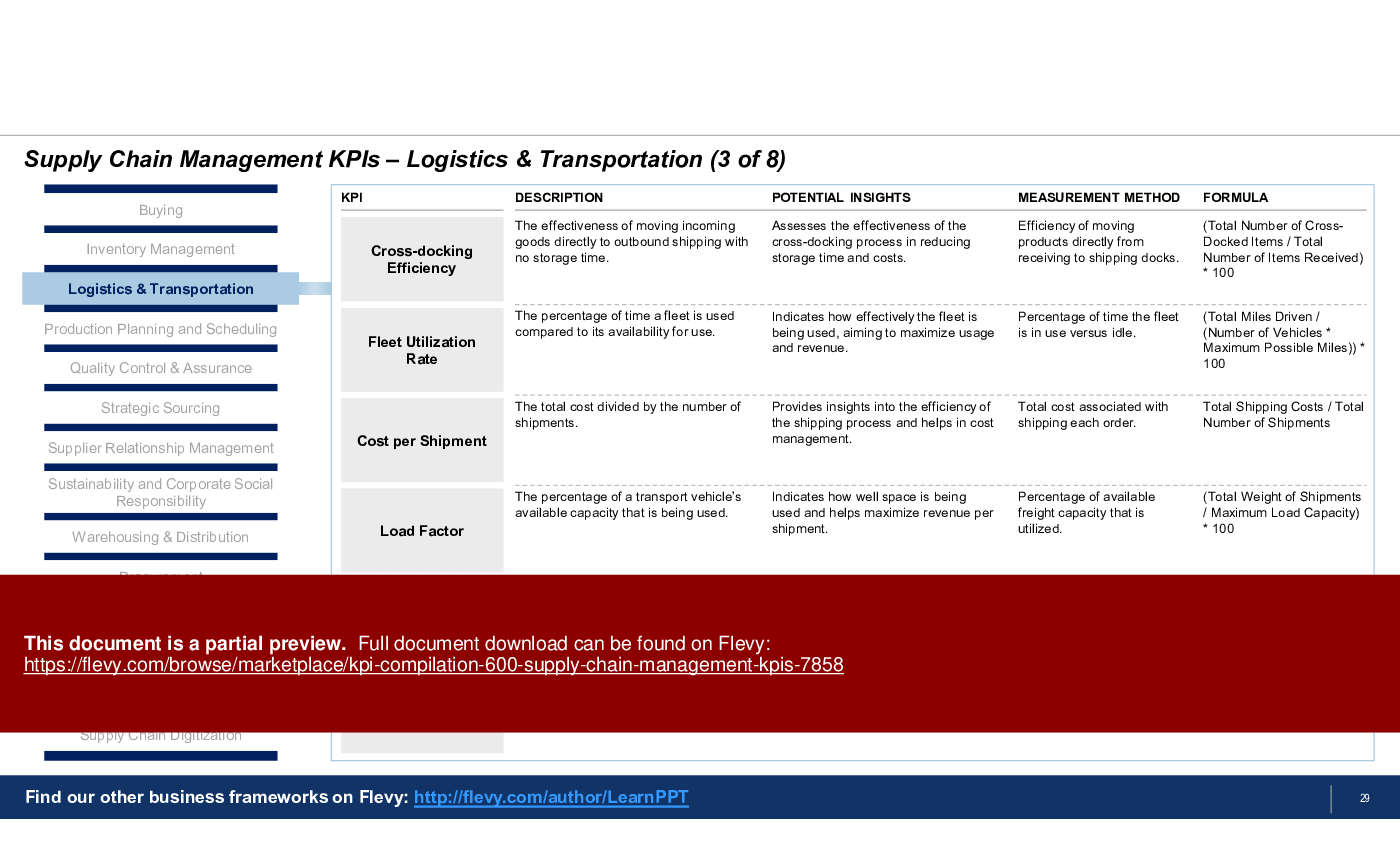
Key performance indicators (KPIs) in logistics and transportation within supply chain management include:
1. On-time Delivery Rate: Measures the percentage of shipments delivered on time, indicating reliability and efficiency in transportation processes, critical for customer satisfaction.
2. Transportation Cost per Unit: Assesses the cost of transporting each product unit; lower costs reflect operational efficiency and inform pricing strategies.
3. Shipment Lead Time: Tracks the duration from order placement to delivery, essential for evaluating transportation efficiency and its impact on customer satisfaction.
4. Average Miles per Gallon (MPG): Indicates fuel efficiency of the transportation fleet; higher MPG values suggest better fuel management and environmental responsibility.
5. Customer Satisfaction with Delivery: Gauges customer feedback on delivery performance; high scores indicate effective logistics operations.
6. Freight Cost As a Percentage of Sales: Analyzes the relationship between freight costs and sales revenue, providing insights into cost efficiency and profitability.
These KPIs offer a comprehensive view of logistics performance, enabling organizations to streamline operations and enhance customer satisfaction.
This PPT slide presents key performance indicators (KPIs) for strategic sourcing in supply chain management. "Sourcing Cost Savings" quantifies financial benefits from sourcing initiatives, emphasizing cost reduction as a key metric. "Supplier Diversity" promotes inclusivity in supplier selection, enhancing social responsibility and collaboration opportunities. The "On-time Delivery Rate" measures supplier reliability, crucial for operational efficiency and performance. "Quality of Goods or Services" links supplier performance to customer satisfaction, highlighting the need for high standards. "Supplier Performance" evaluates suppliers to identify high performers and areas for improvement, optimizing supplier relationships. Lastly, "Sourcing Lead Time" assesses sourcing process efficiency, with shorter lead times enhancing competitive positioning. These KPIs provide a structured framework for improving sourcing strategies and operational effectiveness.
Key performance indicators (KPIs) for warehousing and distribution in supply chain management include:
1. Inventory Accuracy Rate - Assesses precision of inventory records, crucial for preventing shortages or excess stock.
2. Order Fill Rate - Measures the percentage of customer orders fulfilled completely and on time, impacting customer satisfaction and operational efficiency.
3. Order Cycle Time - Evaluates efficiency in order processing; shorter times indicate streamlined operations and improved customer experiences.
4. Perfect Order Rate - Focuses on accuracy in order fulfillment, including completeness and damage-free delivery, essential for customer loyalty.
5. Warehouse Capacity Utilization and Warehouse Space Utilization - Assess effectiveness of warehouse space usage; high rates indicate resource efficiency, while low rates suggest operational adjustments may be needed.
These KPIs provide a framework for evaluating performance and guiding strategic decisions in supply chain optimization.
Source: Best Practices in Key Performance Indicators, Supply Chain Resilience, Digital Supply Chain PowerPoint Slides: KPI Compilation: 600+ Supply Chain Management KPIs PowerPoint (PPTX) Presentation Slide Deck, LearnPPT Consulting
This collection of Supply Chain KPIs is compiled by former McKinsey, BCG, Deloitte, EY, and Capgemini consultants based on best practices in Supply Chain Management.
We are a team of management consultants trained by top tier global consulting firms (including McKinsey, BCG, Deloitte, EY, Capgemini) with a collective experience of several decades. We specialize in business frameworks based on real-life consulting engagements.
We have served 100s of clients that range from Fortune 500 companies to tech startups to
... [read more] $1B+ private companies.
Utilize our consulting frameworks to apply structured thinking & analysis to address your business challenges, uncover strategic insights, and implement workable solutions. Our PowerPoint presentations follow traditional consulting slide design formats, starting with a clear slide headline. Easily customize and repurpose our slides for your own business presentations.
Beyond business frameworks & methodologies, we also offer PowerPoint templates and other business templates. Our templates are professionally designed and have been used in thousands of deliverables & work products across hundreds of clients.
Need KPIs or benchmarks?Explore KPI Depot to access the most comprehensive database of KPI data, organized by function and industry.
Trusted by over 10,000+ Client Organizations
Since 2012, we have provided business templates to over 10,000 businesses and organizations of all sizes, from startups and small businesses to the Fortune 100, in over 130 countries.
Read Customer Testimonials
"Flevy.com has proven to be an invaluable resource library to our Independent Management Consultancy, supporting and enabling us to better serve our enterprise clients.
The value derived from our [FlevyPro] subscription in terms of the business it has helped to gain far exceeds the investment made, making a subscription a no-brainer for any growing consultancy – or in-house strategy team."
– Dean Carlton, Chief Transformation Officer, Global Village Transformations Pty Ltd.
"As a consultant requiring up to date and professional material that will be of value and use to my clients, I find Flevy a very reliable resource.
The variety and quality of material available through Flevy offers a very useful and commanding source for information. Using Flevy saves me time, enhances my expertise and ends up being a good decision."
– Dennis Gershowitz, Principal at DG Associates
"FlevyPro provides business frameworks from many of the global giants in management consulting that allow you to provide best in class solutions for your clients."
– David Harris, Managing Director at Futures Strategy
"I like your product. I'm frequently designing PowerPoint presentations for my company and your product has given me so many great ideas on the use of charts, layouts, tools, and frameworks. I really think the templates are a valuable asset to the job."
– Roberto Fuentes Martinez, Senior Executive Director at Technology Transformation Advisory
"If you are looking for great resources to save time with your business presentations, Flevy is truly a value-added resource. Flevy has done all the work for you and we will continue to utilize Flevy as a source to extract up-to-date information and data for our virtual and onsite presentations!"
– Debbi Saffo, President at The NiKhar Group
"I am extremely grateful for the proactiveness and eagerness to help and I would gladly recommend the Flevy team if you are looking for data and toolkits to help you work through business solutions."
– Trevor Booth, Partner, Fast Forward Consulting
"As a niche strategic consulting firm, Flevy and FlevyPro frameworks and documents are an on-going reference to help us structure our findings and recommendations to our clients as well as improve their clarity, strength, and visual power. For us, it is an invaluable resource to increase our impact and value."
– David Coloma, Consulting Area Manager at Cynertia Consulting
"I have used FlevyPro for several business applications. It is a great complement to working with expensive consultants. The quality and effectiveness of the tools are of the highest standards."

– Moritz Bernhoerster, Global Sourcing Director at Fortune 500
Save with Bundles
This document is available as part of the following discounted bundle(s):
Download our free compilation of 50+ Strategy & Transformation slides and templates. Frameworks include McKinsey 7-S, Balanced Scorecard, Disruptive Innovation, BCG Curve, and many more.